Every home chef, from the budding enthusiast to the seasoned culinary artist, understands the profound impact the right tools have on their craft. Among the vast array of kitchen essentials, the 3 Quart Stainless Steel Saucepan stands out as an indispensable workhorse. It’s that perfectly sized pan you reach for almost daily, a versatile companion ready to tackle countless cooking tasks with unwavering reliability and performance. More than just a pot, a quality 3 quart stainless steel saucepan is an investment in efficiency and culinary excellence, a foundational piece that defines what it means to cook with confidence and precision.
The Enduring Legacy of Stainless Steel in the Kitchen
The journey of stainless steel in our kitchens is a testament to innovation and a pursuit of perfection. While earlier cookware relied on iron, copper, or ceramic, the early 20th century saw the emergence of stainless steel, a material that would revolutionize cooking. Its inherent qualities—resistance to rust, staining, and corrosion—quickly made it a favorite. Over time, advancements like multi-clad construction, sandwiching an aluminum or copper core between layers of stainless steel, further enhanced its performance, leading to the sophisticated, high-performing 3 quart stainless steel saucepan we celebrate today. This evolution ensures superior heat distribution and durability, making it a staple in modern kitchens worldwide.
Unpacking Your 3 Quart Stainless Steel Saucepan: Anatomy and Advanced Features
At first glance, a 3 quart stainless steel saucepan might seem straightforward, but a closer look reveals sophisticated engineering designed for optimal cooking.
The Heart of the Pan: Construction and Materials
The magic often lies in its construction. While “stainless steel” is the overarching term, the best saucepans utilize multi-clad technology.
- 18/10 Stainless Steel: This refers to the grade of stainless steel used for the inner cooking surface, indicating 18% chromium and 10% nickel. This combination makes the surface highly resistant to corrosion, non-reactive with acidic foods, and provides a beautiful, polished finish. It ensures your food tastes pure and free from metallic flavors.
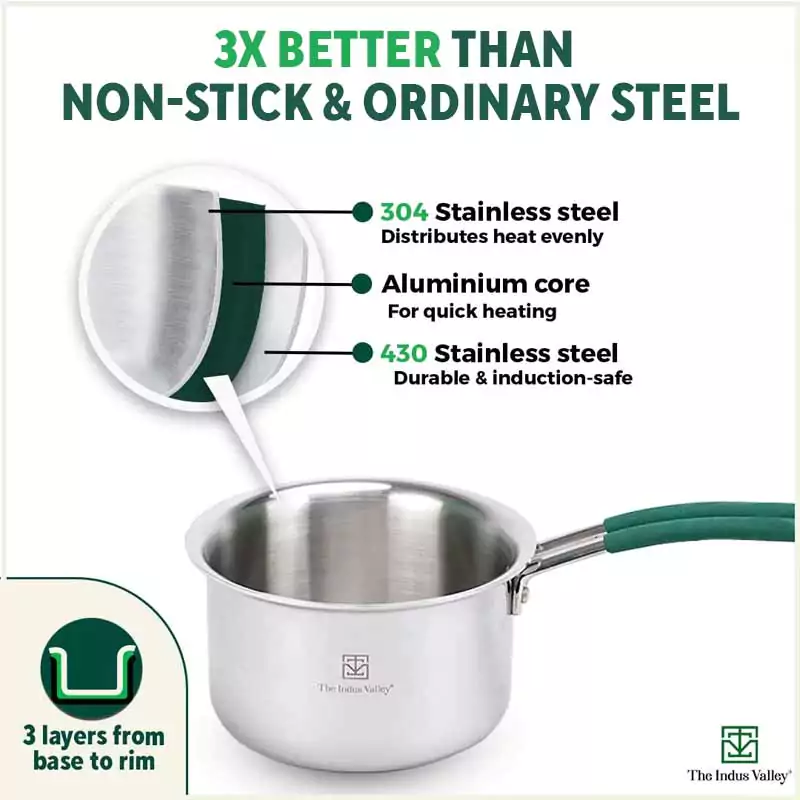
- Aluminum Core: Many premium 3 quart stainless steel saucepans feature an aluminum core, often sandwiched between two layers of stainless steel (known as “tri-ply” construction). Aluminum is an excellent heat conductor, ensuring that heat spreads quickly and evenly across the bottom and up the sides of the pan. This prevents hot spots, which can lead to burnt food.
- Fully Clad vs. Disc-Clad: In fully clad construction, the aluminum core extends from the base all the way up the sides to the rim. This offers superior, even heating throughout the entire pan. Disc-clad pans only have the conductive core at the base, which is still effective but offers less even heating on the sides. For a truly superior cooking experience with your 3 quart stainless steel saucepan, a fully clad design is often preferred.
Thoughtful Design: Lids, Handles, and More
Beyond the core materials, modern 3 quart stainless steel saucepans come with features that significantly enhance usability:
- Lids: Many come with tight-fitting stainless steel or tempered glass lids. Glass lids allow you to monitor your cooking without lifting, while some feature straining holes and pour spouts, eliminating the need for a separate colander for pasta or vegetables.
- Handles: Ergonomically designed handles are crucial for comfort and control, especially when the pan is full. Many are riveted for secure attachment and often feature a “stay-cool” design, thanks to hollow construction or strategic placement, keeping them comfortable to touch on the stovetop.
- Pour Spouts: A subtle lip on one or both sides of the rim can make pouring liquids, like gravies or sauces, drip-free and effortless.
- Internal Measurement Markings: A convenient feature, these laser-etched markings inside the 3 quart stainless steel saucepan allow for precise liquid measurements directly in the pan, saving on extra measuring cups.
Saucepan vs. Saucier: What’s the Difference?
While often used interchangeably, there’s a subtle distinction. A traditional saucepan has straight, high sides. A saucier, on the other hand, features rounded, sloping sides. This design makes a saucier ideal for whisking sauces and reducing liquids, as there are no sharp corners for ingredients to get stuck in. Some 3 quart stainless steel saucepans might lean towards a saucier-like design for enhanced versatility.
The Sweet Spot: Why the 3 Quart Stainless Steel Saucepan Excels
Why is the 3-quart size so frequently recommended as the “go-to” saucepan? It’s all about balance and versatility. Smaller 1.5-quart pans are great for single servings or melting butter, while larger 4-quart or 5-quart pots venture into small stockpot territory. The 3 quart stainless steel saucepan hits that sweet spot, offering ample capacity for:
- Cooking rice or grains for 2-4 people.
- Preparing a hearty batch of soup or chili.
- Boiling pasta for a family meal.
- Reducing sauces or making gravies without crowding.
- Steaming vegetables.
“The 3-quart size is truly the backbone of a well-equipped kitchen,” says Chef Anya Sharma, a culinary instructor and expert in kitchen ergonomics. “It’s large enough for most daily tasks yet compact enough not to be cumbersome. It really defines efficiency.”
The Pros and Cons of Your Stainless Steel Companion
Like any kitchen tool, the 3 quart stainless steel saucepan comes with its own set of advantages and considerations.
Unbeatable Advantages
- Exceptional Durability: Built to last, high-quality stainless steel saucepans can withstand years of rigorous use without warping, chipping, or rusting. Many premium brands even offer lifetime warranties.
- Non-Reactive Surface: Unlike aluminum or cast iron, stainless steel does not react with acidic foods (like tomato sauce or lemon juice), preserving the true flavor of your ingredients.
- Even Heat Distribution: Thanks to its clad construction, a good 3 quart stainless steel saucepan ensures uniform heating, preventing hot spots and allowing for precise temperature control. This is key for delicate sauces and perfectly cooked grains.
- Versatility Across Cooktops: Most stainless steel saucepans, especially those with magnetic exteriors (like 400-series stainless steel), are compatible with all cooktops, including induction, gas, electric, and ceramic glass.
- Oven and Broiler Safe: Premium stainless steel saucepans can typically go from stovetop to oven or broiler, often up to 500°F (260°C) or even 600°F (315°C), making them ideal for finishing dishes or keeping food warm.
- Easy to Clean and Maintain: Stainless steel is relatively easy to clean, often dishwasher safe (though hand washing is recommended by some manufacturers to preserve finish). It resists stains and odors well.
Important Considerations
- Potential for Sticking: Unlike non-stick pans, stainless steel requires proper preheating and often a bit of oil or fat to prevent food from sticking. This is a learned technique but one that unlocks fantastic browning and searing.
- Price Point: High-quality, multi-clad 3 quart stainless steel saucepans from reputable brands can be a significant investment, though their durability often makes them more cost-effective in the long run.
- Weight: Fully clad stainless steel pans can be heavier than aluminum or non-stick alternatives, which might be a consideration for some users.
Choosing Your Perfect 3 Quart Stainless Steel Saucepan
Selecting the right 3 quart stainless steel saucepan can feel overwhelming with so many options. Here’s what to look for to ensure you make the best choice:
- Construction is King: Prioritize fully clad (tri-ply or 5-ply) construction with an aluminum or copper core that extends up the sides. This ensures the best heat distribution. Brands like All-Clad and Tramontina are frequently praised for their tri-ply stainless steel options.
- Comfortable, Secure Handle: A well-designed handle is essential. Look for ergonomic shapes, riveted attachments for durability, and “stay-cool” features to protect your hands.
- Lid Functionality: A tight-fitting lid is a must. Decide if a transparent glass lid for visibility or a stainless steel lid with straining features is more important for your cooking style.
- Cooktop Compatibility: Confirm the saucepan is compatible with your specific cooktop, especially if you have an induction stove. Most quality stainless steel pans are induction-friendly.
- Brand Reputation and Warranty: Invest in reputable brands known for quality and customer service. A good warranty reflects the manufacturer’s confidence in their product.
- Consider Your Budget: While premium options offer top-tier performance, excellent value picks are also available. “Even on a budget, you can find a truly fantastic 3-quart stainless steel saucepan,” notes Chef Sharma. “Look for solid tri-ply bases, and you’ll get great performance without breaking the bank.”
Mastering Your 3 Quart Stainless Steel Saucepan: Use, Care, and Cleaning
To get the most out of your 3 quart stainless steel saucepan and ensure its longevity, proper use and care are essential.
Smart Cooking Techniques
- Preheating is Key: Always preheat your empty saucepan on low to medium heat for a few minutes before adding oil or food. This helps create a natural non-stick surface and ensures even cooking. You can test if it’s ready by flicking a few drops of water into the pan; if they bead up and dance, it’s ready.
- Use the Right Heat: Stainless steel is incredibly efficient. Avoid using excessively high heat, as this can lead to scorching and sticking. Medium heat is usually sufficient for most tasks.
- Allow Food to Release: When searing or browning, don’t try to move the food too early. It will naturally release from the pan once a crust has formed.
Caring for Your Investment
- Cool Before Cleaning: Never plunge a hot stainless steel saucepan into cold water, as this can cause warping. Let it cool down naturally first.
- Hand Washing for Best Results: While many are dishwasher safe, hand washing with warm, soapy water and a non-abrasive sponge is often recommended to maintain its pristine finish and prevent mineral buildup.
- Tackling Stains and Burnt Food:
- “Rainbow Stain” or Discoloration: This is harmless and caused by minerals in water reacting with the stainless steel. A quick wipe with vinegar or a specialized stainless steel cleaner will usually remove it.
- Stuck-on Food: For stubborn bits, deglaze the pan while it’s still warm with a bit of water or stock. For heavily burnt food, fill the pan with water, add a few tablespoons of baking soda, bring to a simmer, then let it cool before scrubbing.
Beyond Stainless: A Quick Look at Other Saucepan Materials
While the 3 quart stainless steel saucepan shines, it’s helpful to understand how it stacks up against other common saucepan materials:
- Cast Iron: Known for exceptional heat retention and durability, but it’s heavy, requires seasoning, and is reactive to acidic foods. Less ideal for quick sauces or boiling water.
- Non-Stick: Offers unparalleled food release, making it easy to clean. However, non-stick coatings can scratch and degrade over time, and they typically have lower heat tolerances than stainless steel. Not ideal for browning or searing.
- Copper: A beautiful, highly conductive material that heats up and cools down very quickly, offering precise control. However, copper is expensive, requires more maintenance (polishing), and can react with acidic foods, often requiring a tin or stainless steel lining.
For its balance of durability, versatility, non-reactivity, and consistent performance, the 3 quart stainless steel saucepan remains a top choice for everyday cooking.
Culinary Creations: What to Cook in Your 3 Quart Stainless Steel Saucepan
The beauty of the 3 quart stainless steel saucepan lies in its incredible versatility. It’s truly a multi-tasker, perfect for:
- Perfect Sauces and Gravies: From a delicate béchamel to a rich demi-glace, the even heating of stainless steel is ideal for simmering and reducing. Its straight sides help to concentrate liquids.
- Fluffy Grains: Whether it’s rice, quinoa, or couscous, the consistent heat ensures each grain cooks perfectly without burning.
- Boiling Pasta: It’s the ideal size for a standard box of pasta, providing enough room for the pasta to move freely.
- Hearty Soups and Stews: Great for preparing smaller batches of your favorite comfort foods.
- Blanching and Steaming Vegetables: Its depth allows for efficient blanching or steaming with a compatible steamer insert.
- Hard-Boiled or Poached Eggs: Just the right capacity for a few eggs.
- Reheating Leftovers: Heats food evenly without the risk of hot spots.
- Melted Butter or Chocolate: Gentle, even heat is crucial for these delicate tasks.
Expert Insights: What the Pros Say
“In my professional kitchen, a 3 quart stainless steel saucepan is never far from reach,” shares Chef Samuel Dubois, renowned for his classic French cuisine. “Its ability to maintain steady temperatures for delicate sauces or to quickly bring a stock to a gentle simmer is unmatched. The durability means it can withstand the intensity of daily service, truly earning its place as a kitchen legend.”
Frequently Asked Questions About the 3 Quart Stainless Steel Saucepan
Is a 3 quart stainless steel saucepan induction compatible?
Absolutely! Most modern, high-quality 3 quart stainless steel saucepans are designed with a magnetic base, making them perfectly compatible with induction cooktops, as well as gas, electric, and ceramic. Always check the manufacturer’s specifications to be sure.
How do I prevent food from sticking in my stainless steel saucepan?
The key is proper preheating. Heat your empty saucepan over medium heat for a few minutes until a drop of water beads up and dances on the surface. Then, add a small amount of oil or fat, let it shimmer, and then add your food. This creates a non-stick layer.
Can I put my stainless steel saucepan in the oven?
Yes, most stainless steel saucepans are oven-safe, typically up to 500-600°F (260-315°C). Ensure the lid and handle materials are also oven-safe. Glass lids may have lower temperature limits.
What is “tri-ply” construction and why is it important?
Tri-ply construction refers to cookware made of three bonded layers: an inner layer of stainless steel, a core layer of aluminum (or copper), and an outer layer of stainless steel. This design is crucial because it combines the durability and non-reactivity of stainless steel with the superior heat conductivity of aluminum, ensuring fast, even heating without hot spots.
How do I remove burnt food from my stainless steel saucepan?
Don’t fret! For tough burnt-on food, fill the 3 quart stainless steel saucepan with water and add a few tablespoons of baking soda. Bring it to a simmer for 10-15 minutes, then let it cool. The burnt food should loosen, making it much easier to scrub away with a non-abrasive sponge.
Your Kitchen’s Enduring Asset
The 3 quart stainless steel saucepan is far more than just another piece of cookware; it’s a cornerstone of culinary capability. Its robust construction, superior heat management, and remarkable versatility make it an indispensable asset in any kitchen. By understanding its features, caring for it correctly, and embracing its myriad uses, you unlock a world of cooking possibilities. Invest in a quality 3 quart stainless steel saucepan, and you’re not just buying a pot – you’re enhancing your entire cooking experience, ensuring delicious results for years to come.